

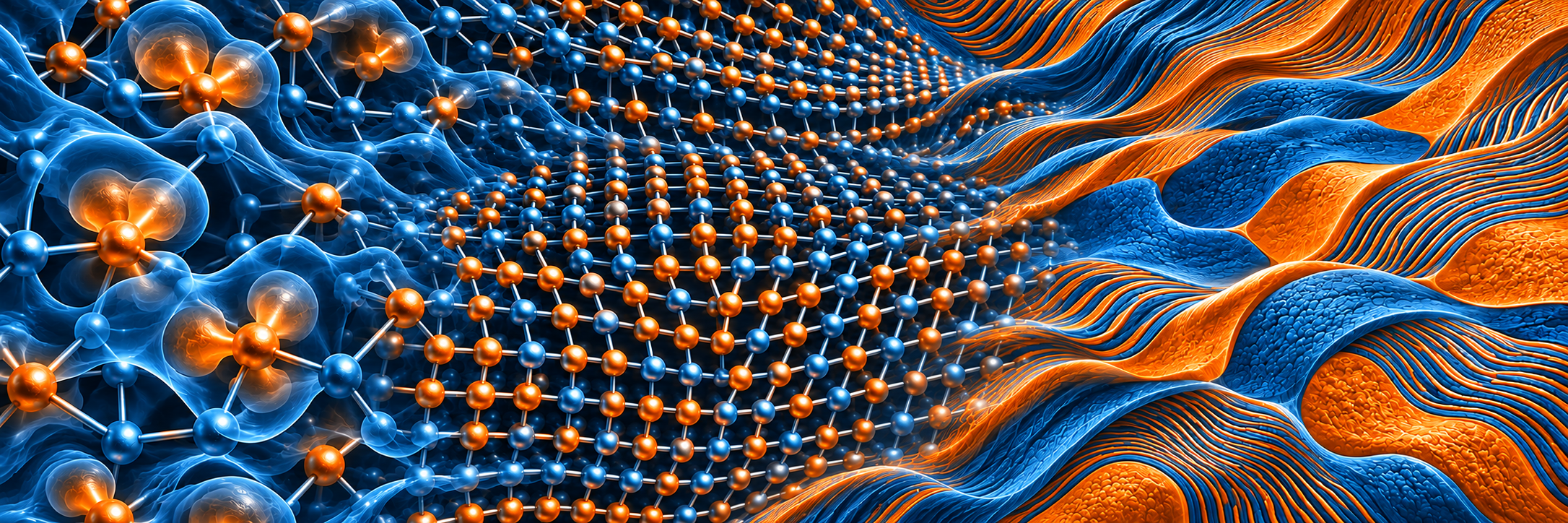

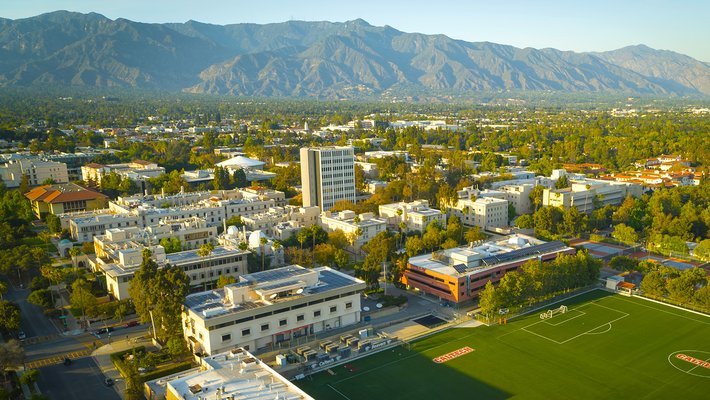
Join us in Pasadena for USNCMM19!
Together with Dr. Susanta Ghosh (Michigan Tech) and Dr. Amartya Banerjee (UCLA) we are organizing a mini-symposium on data-driven and computational multiscalemodeling of materials at the 19th US National Congress for Computational Mechanics.
Abstracts are due January 15, 2027, and the meeting is at the Pasadena Convention Center from 25-29 July 2027. We look forward to seeing you there!
This minisymposium brings together researchers advancing theoretical, computational, and data-driven approaches to understanding and predicting materials behavior at electronic, atomistic, and mesoscopic scales. The symposium will focus on how interactions, defects, and collective phenomena govern material properties, microstructure evolution, and response, as well as on the methods needed to describe them. Contributions addressing individual scales, as well as approaches that connect length and time scales, are welcome.
Topics of interest include, but are not limited to:
- Electronic-structure and atomistic calculations: Development and application of numerical methods for first-principles calculations and atomistic simulations, including empirical and machine-learned interatomic potentials.
- Coarse-graining, multiscale, and multiphysics modeling: Spatial and temporal coarse-graining and multiscale coupling for materials with complex microstructures, including models of plasticity and coupled electrical, magnetic, chemical, and mechanical behavior.
- Phase transitions and microstructure evolution: Mathematical and computational frameworks for phase transitions, pattern formation, and evolving microstructures, including variational methods, cluster Hamiltonians, and phase-field models.
- Defects and collective behavior: Dislocation dynamics, statistical-mechanical approaches, classical density functional theory, and related methods for understanding material behavior at atomic and mesoscopic scales.
- Machine learning and data-driven approaches: Physics-informed neural networks, generative models such as diffusion models, and attention-based architectures for predicting materials behavior, accelerating design and discovery, and integrating simulation and experimental data.
- Applications to functional materials: Modeling and characterization of materials for energy technologies, quantum information science, spintronics, and other functional applications.
Across these topics, particular emphasis will be placed on computational efficiency, physical consistency, generalization, uncertainty quantification, and interpretability.